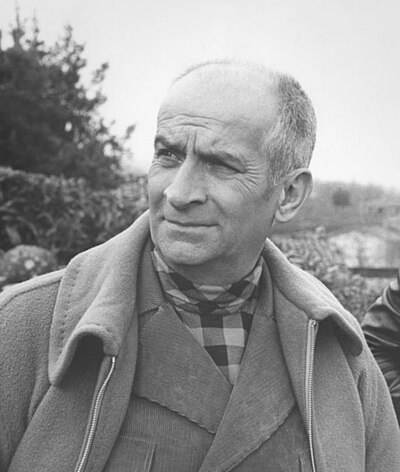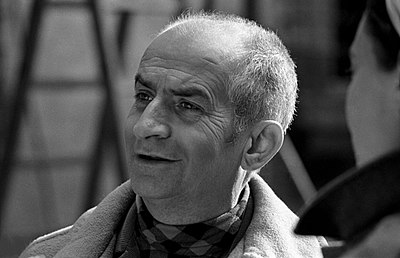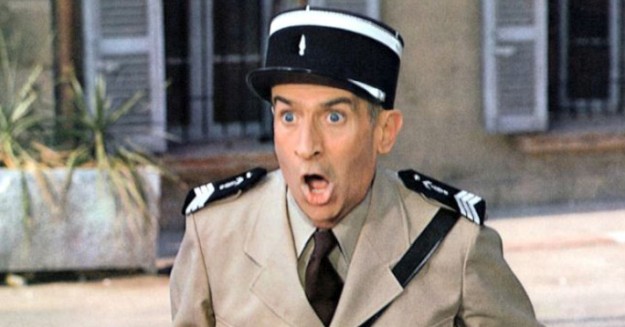
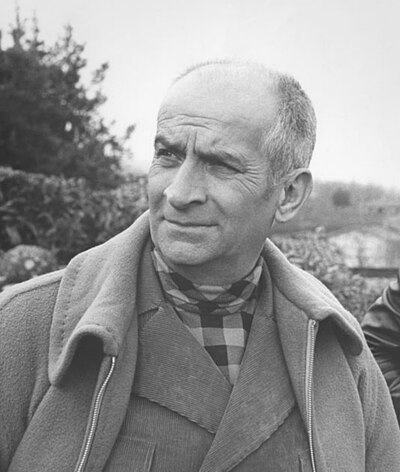


Louis Germain David de Funès de Galarza was born on July 31, 1914, in Courbevoie, France. He was the son of parents of Spanish origin. Early in his life, he showed a talent for piano and mime, skills that would later form the foundation of his comedic genius.
Early Years and Piano Career
Before becoming a cinema legend, de Funès was a professional jazz pianist. He played in various bars in Paris, where he developed a flawless sense of rhythm and timing—skills that would later define his comedic style, often referred to as "forty faces a minute." During World War II, he continued playing piano while also beginning acting classes at the Cours Simon.
Rise to Fame
De Funès worked for many years in over 100 small roles in theatre and cinema before achieving stardom. It wasn't until his 40s that he became a major star. His breakthrough came with the film Pouic-Pouic (1963), and he soon became a national treasure in France and a massive star throughout Europe.
Comedic Style
He was famous for his high-energy performance, rapid-fire speech, and incredible facial expressions. His characters were typically impatient, quick-tempered, and authoritative, yet endearing. He often portrayed the "petit chef" (little boss) archetype—submissive to superiors and tyrannical toward subordinates.
Iconic Roles
He is best remembered for the Gendarme of Saint-Tropez series, the Fantômas trilogy, and legendary films such as The Mad Adventures of Rabbi Jacob and La Grande Vadrouille. La Grande Vadrouille remained the most successful French film at the box office for over 40 years.
Awards and Honors
- Honorary César: Awarded in 1980 for his lifetime contribution to French cinema.
- Légion d'Honneur: Named a Knight (Chevalier) of the Legion of Honor in 1973.
- Box Office King: Throughout his career, his films sold over 270 million tickets in France alone.
Personal Life and Legacy
Off-screen, Louis de Funès was known as a quiet and modest man who deeply loved gardening, especially roses. There is even a rose variety named after him: the Louis de Funès rose. He passed away on January 27, 1983, but his films continue to bring laughter to new generations of fans worldwide.
Did You Know? (Trivia)
- He came from a Spanish noble family (his father was a lawyer from Seville).
- He was trilingual: fluent in French, Spanish, and English.
- He was a committed environmentalist and organic gardener long before it was fashionable.
- A heart attack in 1975 forced him to slow down his energetic performance style, leading to more subtle but equally brilliant roles in his final years.